Showing posts with label gerneral research. Show all posts
Showing posts with label gerneral research. Show all posts
17/05/2017

16/05/2017
a photo by Cindy Sherman
Untitled Film Still #48, 1979,(see fig. 5) by Cindy Sherman

In this photo, a woman wearing old clothes with a suitcase, standing on the roadside. The road, stone, trees on the left and distant mountain are so dark that almost can not see anything. Only the sky, the route and the woman are clearly visible. The dark background makes the road has an illusion of infinitely extending. The woman will wait indefinitely. Sherman carefully selected clothes, scenes and composition, created a photo like a scene from a movie.
13/05/2017
50 Notes from Painting’s Wrongful Death: The Revivalist Practices of Glenn Brown and Gerhard Richter
ABSTRACT
1.The primary developments identified are that painting now draws from and references many other media; painting now embraces photography (instead of seeing it as a threat); the use of appropriation in painting is now seen as expansive rather than as representing depletion; there has been a return toromanticism and pleasure in painting;
INTRODUCTION
2.We are now beginning to see painters turn away from demonstrating the absolute ‘death’ of painting, towards less nihilistic investigations into the ‘failures’ or ‘limitations’ ofpainting that acknowledge its continued relevance and importance.
3.Glenn Brown and Gerhard Richter initially started painting about the‘failures’ and ‘limitations’ oftheir medium, yet their investigations haveresulted in their works negating否定 the very thing they set out to discuss. That is, they address the failure of painting but in successfully doing so demonstrate its enduring relevance持久的相关性 and success. I am exploring how Brown and Richter paint with the issue ofthe medium’s ‘failure’ and ‘limitations’ as their subject, yet paradoxically自相矛盾地 make works that demonstrate painting’sLegitimacy.(合法性) The legitimacy and success ofboth Brown’s and Richter’s work, is evidenced证明 by their practices being judged as relevant and important in the critical arena and is achieved by embracing a number of changes brought about by the ‘death ofpainting’ debate.
4.In Beauty and theContemporary Sublime (1 999), Jeremy Gilbert-Rolfe identifies Duchamp as precipitating沉淀 the initial and most significant early twentieth century crisis for painting, through his ‘abolition废除 of the retinal视网膜的 in the interests of a very old-fashioned distinction区别 between form and content’ 废除视网膜的(视觉的?)对旧式的形式和内容的区别的兴趣? (Gilbert-Rolfe 1999, 1 9-20)
5.His oeuvre工作(作品?)includes both realist and abstract series, ranging from very blank monochromatic works to those based on photographs and imagesfrom newspapers and magazines. His photo-based works are what he is most well known for. In these he imitates the photographic source image, including blurs, smudges and other photographic attributes. While his paintings have lead to much critical success, Richter’s relationship with the medium creates a paradox悖论 for his practice. He has built a career upon‘testing the medium’s limits yet remaining one ofits most loyal adherents忠诚的信徒’ (Holert 2002, 98).
6. Brown addresses the question of the ‘failure of painting’ bysuggesting the ‘failure’ he recognises识别 means that all that remains for a painter to do is to paint someone else’s painting, not even allowing one’s own brushstrokes to prevail. However, by removing himself so entirely from the process he makes a powerful statement about the possibilities left for the medium he is simultaneously同时 abandoning废除 and embracing拥抱.
7.Everything is linked together to confuse the issue of authorship by showing a deliberate appropriation ofwell-known art works by an artist who,nevertheless, has never painted like anyone else, although he shows that he would have liked to. He presents this “would-have-liked-to” as a conceptthat takes failure for granted: an artist must have a sense of humour – adistance from oneself– and be strong enough to push the existence of failure to the front line of his work (Hetzler 2000, 1 10).
8.But then my copy went wrong, and the pictures that finally emerged went to show that it just can’t be done any more, not even by way of a copy. All Icould do was break the whole thing down to show that it’s no longerpossible (Richter in Storr 2003, 226).
9.‘Painting is dead, killed by video and photography, the artist [Richter] intimates谈起 – and then proceeds收益 to paint magnificently to prove the point’ (Fischer 2002, 1).
10. discussions about the failures and limitations of painting have been fuel for a generation of painters, who have disproved反驳 painting’s negation否定 by directly addressing the failure of their medium. 对绘画的失败和限制的讨论,已经成为一代艺术家的源动力,他们已经通过直接指出这媒体的失败之处,来反驳绘画的否定性。
11. Roland Barthes stated that, “To be modern is to know that which is notpossible any more”
12.illustrating how they make reproductions from painting’shistory to make a case for painting’s future. (他们如何从绘画的历史中,重制?,来为绘画的未来做一个案例?)
13. by embracing all the other media that had bombarded轰炸 and taken over painting, these other media, far from being threats, became tools that artists could use to make new and relevant paintings. By embracingappropriation (which was initially used to illustrate thatthere was nothing left to do but imitate something already made), appropriation too went from being a threat to painting to being another tool that painters could use to make new andinnovative works.
14.by re-acquainting重新熟悉 itself with the pre-Modernist attributes of romanticism浪漫主义 and romantic sentimentality感伤, painting was able to draw from is previously unfashionable past to ensure its future. ???
CHAPTER II.
15.Richter’s extensive body ofwork has always had one constant motivationby which it hasbeen driven: to question and challenge the medium of painting.
16.Pressed by the critic (Buchloh) to admit that the tension张力 in his work between depiction描写 and self-reflection – in other words, the making of images and the critical examination of them – was set up in order “to show the inadequacy不足, the bankruptcy of both双方破产?” Richter replied, ”not the bankruptcy, but always the inadequacy不足,” after which he took care to stipulate规定 that he meant this “in relation to what is expected of painting” (Storr 2003, 15).
17.He began collecting photographs and newspaper and magazineclippings that were later exhibited as a collection (Atlas, 1964-1995), and also used as source ofmaterial to paint from (Kimmelman 2002, 5).
18. He has at once been painting’s greatest defender in the face of accusations指责 of its redundancy冗余, while also taking pains辛劳 to illustrate说明 his acknowledgment of its failures.(GR同时维护绘画,当其受到指责多余,但同时努力说明绘画的失败)
19.suggests that Richter’s unique perspective is a result of his havingbeen completely ‘unprepared for the complex developments of theTwentieth Century avant-garde’ (having trained in East Germany unaware of activity in the West until he moved there in the 60s) (Krauss 2002, 158).
20.Richter acknowledges this failure, yet Seigal suggests that what Richter attempts toshow us is that photography and video cannot do this either- ‘they have interruptions中断 oftheir own’ (Siegal 2002, 162). The main‘interruption’中断 could be seen to be the increased subjectivity主观性 of photography and video (due to advancements进步 in digital technology). Media that were once assumed假定是 to be reliable and objective are now subject to easy manipulation. Recording information as a photograph is a process of ‘evening out’ everything,(通过照相来收集信息相当于把所有东西吞并,集合在一个平面上) as all theinformation in that photo is recorded equally in a ‘flat’ way. In producing the appearance of the photograph Richter is attempting 尝试to replicate复制 this device by blurring and softening the image until it all appears to be one united flat surface.
21.I blur things to make everything equally important and equallyunimportant. I blur things so that they do not look artistic or craftsmanlike but technological, smooth and perfect. I blur things to make all parts a closer fit. Perhaps I also blur out the excess过量 of unimportant information (Richter 1993, 37).
22.Storr states that this ‘flatness’ is a distancing mechanism隔离机构 aimed to keep Richter’s as well asthe viewer’s distance from the subject matter主题 (Storr 2003, 62). Historically, photo-realism in painting worked to create a distance between the viewer and the painting, due to由于the viewer’s inability无力 to relate to anything human in the construction构造 of the painting (Bourriaud 1992, 90).
Richter employs this distancing device by eliminating any trace ofthe artist’s brushstroke, creating an all over even blur or softness that obscures the image and conceals隐藏 how it isconstructed构造 (Storr 2003, 91). Often this blurring leaves traces across the painting and works to subtly巧妙 ‘conceal’ the images, but as Seigel suggests, perhaps it also animates活跃 the surfaces creating a ‘conflict of stillness and movement静止和运动的冲突’ (Seigel 2002, 162).
23.His deliberately故意 austere严肃 works proposed提议 that the kind of sincerity诚意 in painting that was exploited开发 by the expressionists was no longer possible once painting had been overtaken by (印象派没前途)photography and video, provoking挑衅 the reduction减少 of painting to itsformalist roots形式主义根源 (Storr 2003, 92). However, as with all of Richter’s works in the construction ofthe paintings, born out ofa sense of nihilism虚无主义, there grew增长 hope.
24.In theArtforum debate David Reed sees these works together with the colour chart paintings as ‘a turning point from hopelessness to new possibility’ (Reed 2002, 159).
25. As Richter avoids aesthetic decisions by using readymade sources, thesepaintings, although very different in appearance from the photo-based paintings, share their philosophical underpinnings哲学基础. Richter absorbs aspects of photography into paintings rather than relying on the appearance of the photograph per se(Reed 2002, 159).
26.Richter talks extensively about his body ofwork and refers指 to these paintings as having‘failed’ and goes on to say that he chose to continue painting them to illustrate this ‘failure’. ‘ [. .]But then my copy went wrong,and the pictures that finally emerged went to show that it just can’t bedone any more, not even by way of a copy. All I could do was break thewholething down and show that it’s no longer possible‘ (Richter 1993,226).
27.could be seen to be a very Modernist thing to do – as it uses the idea of breaking down an image to reach some kind of a conclusion.结论
28.What is past is only the set of circumstances that allowed it to be painted’ (Richter 1993, 80).
29. all of these ways of painting can tell us as much about the medium’s future and the possibilities for painting as they can about themedium’s past and what cannot be done any more.这些绘画方式可以告诉我们所有关于这媒体的未来和可能性和过去和其不能再达到的。 The key is in acknowledging the things that they can not do, the things that have ‘died’, in order to give the medium a future.
30.Painting is no longer the dominant medium it once was. There is no urgent need to topple倾翻 it from its pedestal座位 when other practices have begun to crowd painting on an equal匹敌, or nearly equal, footing. Moreover, the new art forms championed支持 at its expense花费 have begun to show their age and accumulate积累 the burdens负担 that come with tradition in any medium (Storr 2003, 17). 新媒体已经变老?来自传统的负担?
31. it is important to have anunderstanding ofwhat these works were about to gain a better insight into
32. by replicating复制 this style of painting yet in a very different way from how it is normally made, Brown could be seen to be mourning追悼 a style ofpainting that can no longer be sincere真诚. Overly expressionist and gestural painting is a hallmark标记 of high-Modernist painting that quickly lost its appeal呼吁 in the34 face of Minimalism and cool Post-Modern practice.
33.Then the photographgets turned into a print, which gets put in a book. I get that book and do mypaintings from it. Through those stages, the original person gets further andfurther back. Further and further lost, further removed. The whole notion that there was a character underneath the image kept me wanting to do them. Itwas that sort ofloss, as ifthey were ghosts (Brown in Myers 2000, 74).
34.Appropriation usually affords给予 the artist akind of distance, in that they are one step removed from the image because it is not their own.
35.why Richter’s Titian copies failed – because the sincerity oftheoriginals was unable to be replicated复制 any more (Storr 2003, 104)
36.Perhaps what Brown and Richter highlight is the question – how can you paint seriously any more without a compelling引人注目的 purpose目的?
37.Everytime the avant-garde appropriates拨款 elements from the discourses of low, folk民间 or mass culture, it publicly denounces谴责 its own elitist isolation精英分离 and theobsolescence 过时of its inherited遗传 production procedures程序 (Brown in Lafuente 2004, 112).
CHAPTER III
38.The ‘death ofpainting' debate now tends to represent代表 the ‘death’ of an older way ofthinking about painting and the emergence紧急情况 of a new type of painting.
39.Whereas in the past painting was defined as the application ofpaint on canvas it now is more a ‘mode of thought than just a medium’ (Bradley in Daniel-McElroy 2003, 50).
40.Critic Katy Siegel states that other media, and in particular more technological media, capture the changing technology-driven world more successfully than painting (Siegel 2004, 162).Theorist Gilbert-Rolfe concurs赞成, proposing提出 that the difficulty for painting is that it will always struggle挣扎 to capture a technological based world because it itselfis本身 not technologically based.
41. the philosophy of painting is permeating渗入 other media in order to sustain支持 its own.
42. Thierry DeDuve demonstrates this new positive was of looking at photography, when he states ‘What is a photograph, if not a readymadepainting?’ (De Duve in Danto 2003, 269).
43.In 1962 I found my first escape hatch逃生舱口: by painting from photographs, I was relieved ofthe need to choose or construct a subject [..] My appropriation of photographs, my policy of copying them without alteration and without translating them into a modern form (as Warhol and others do ), representeda principled avoidance of the subject (Richter 1993, 130)
44.Here, Richter calls usingappropriated images ‘liberating解放’, in that using found images to base his paintings on allowed him to concentrate on other aspects of painting.
45.Perhaps appropriating something that is seen to have ‘failed’ in the first place is an easier thing to do thatappropriating something that is universally普遍 revered尊敬.
46.It is no longer unacceptable or unfashionable to show a pleasure in painting, and furthermore, it is now even accepted as a motivation for a body ofwork and an entire practice.
47. ‘[… ] critics are once again seeing the notions of pleasure and freedom buried in the tradition of idealist aesthetics美学 as valuable – in a vague模糊, ethical伦理 kind of way, if not politically. It may well be just this new licence for pleasure which has allowed painting to slip its moorings and leave offthe thoroughly彻底exhausted累 modernist terms of surface, depth, form, space; terms which were an onerous繁重 preoccupation关注 for the drippers滴管 and stretchers担架 of the mid 90s(Falconer 2003, 4).
48.The expansion ofthedefinition of painting to include other media, the expanded role of photography in painting, the shift in what it means to use appropriation, the re-acceptance of romanticism and sentimentality伤感 and the inclusion包容 ofwomen, all demonstrate the changed nature ofpainting44 brought about by the ‘death ofpainting’ debate.
49.A narrow way of thinking about painting has since been replaced by a broad and fractured approach that draws in and discards other media and concepts at will.
50. The modernist logic ofpainting […] was tested测试 to exhaustion in the 50sand 60s: it is no longer ofmuch relevance at all. […] The fact ofcontemporary painting’s disorientating迷失方向 pluralism多元化, however, is surelyevidence of the fact that there are no central concerns, no governing管理 logic, in current practice at all (Falconer 2003, 270).
Painting’s Wrongful Death: The Revivalist Practices of Glenn Brown and Gerhard Richter
https://www120.secure.griffith.edu.au/rch/items/56f7ad44-3b32-5ab9-8415-3ad95613407d/1/
Description
Victoria Reichelt. 2005. Painting’s Wrongful Death: The Revivalist Practices of Glenn Brown and Gerhard Richter.Thesis (Professional Doctorate), Griffith University, Brisbane.
Abstract
This thesis considers how the Twentieth Century ‘death of painting’ debate brought about a series of challenges and changes to painting that have ironically ensured its survival. This is illustrated in the practice of artists Gerhard Richter and Glenn Brown, whose investigations into painting’s failures and limitations have paradoxically resulted in their works demonstrating the continued relevance and success of the medium. Specifically, this discussion analyses Richter’s Annunciation After Titian (1973) series and Brown’s series of works that appropriate Frank Auerbach paintings (1998 - 2000). These works illustrate the ways in which painting has developed in the last half of the Twentieth Century as a result of the 'death of painting’ debate. The primary developments identified are that painting now draws from and references many other media; painting now embraces photography (instead of seeing it as a threat); the use of appropriation in painting is now seen as expansive rather than as representing depletion; there has been a return to romanticism and pleasure in painting; and women are now included in the broader discussion of painting. In considering the 'death of painting’ debate, as well as the changes painting has experienced as a result of it, the primary point of departure is Yve-Alain Bois’ pivotal essay 'Painting: The Task of Mourning’ (1986) and his analysis of Hubert Damisch’s 'theory of games’. The evolution of the 'death of painting’ debate is also outlined via the writings of Douglas Crimp, Arthur C. Danto, Douglas Fogle, Michael Fried, Jeremy Gilbert-Rolfe and Georg Wilhelm Friedrich Hegel. This thesis also considers how the debate has impacted contemporary painters’ practices, as well as how my own practice owes a debt not only to the response of artists like Brown and Richter, but also to the debate itself.
The Work of Art in the Age of Mechanical Reproduction
Walter Benjamin (1936)
The Work of Art in the Age of Mechanical Reproduction
IV
An analysis of art in the age of mechanical reproduction must do justice to these relationships, for they lead us to an all-important insight: for the first time in world history, mechanical reproduction emancipates解放 the work of art from its parasitical dependence on ritual(对仪式的寄生依赖). To an ever greater degree the work of art reproduced becomes the work of art designed for reproducibility.(再生性) From a photographic negative, for example, one can make any number of prints; to ask for the “authentic” print makes no sense. But the instant瞬间 the criterion标准 of authenticity ceases to be applicable to artistic production, the total function of art is reversed. Instead of being based on ritual, it begins to be based on another practice – politics.
V
With the different methods of technical reproduction of a work of art, its fitness for exhibition increased to such an extent that the quantitative shift between its two poles turned into a qualitative transformation of its nature. This is comparable to the situation of the work of art in prehistoric times when, by the absolute emphasis on its cult value, it was, first and foremost, an instrument of magic. Only later did it come to be recognized as a work of art. In the same way today, by the absolute emphasis on its exhibition value the work of art becomes a creation with entirely new functions, among which the one we are conscious of, the artistic function, later may be recognized as incidental. This much is certain: today photography and the film are the most serviceable exemplifications of this new function.
XI
Magician and surgeon compare to painter and cameraman. The painter maintains in his work a natural distance from reality, the cameraman penetrates deeply into its web. There is a tremendous difference between the pictures they obtain. That of the painter is a total one, that of the cameraman consists of multiple fragments which are assembled under a new law. Thus, for contemporary man the representation of reality by the film is incomparably more significant than that of the painter, since it offers, precisely because of the thoroughgoing permeation of reality with mechanical equipment, an aspect of reality which is free of all equipment. And that is what one is entitled to ask from a work of art.
(要求画家画出超出现实的,非机械,感性的内容。)
09/05/2017
The SECRET Behind FAST & FURIOUS Chase Scenes! - Frame by Frame
The secret behind car chase scenes.
a contiuing motion facter is key rule to creat coherence action sequences.
HOW TO SHOOT CONCEPTUAL PHOTOGRAPHY
This video is about PHOTO SEQUENCES.
I think this is a very good way to pratice telling story through images. I think same idea can apply to drawings and paintings.
Chef’s Table
This series of documentaries broke my impression of the chefs.
These chefs show surprising creativity and indomitable hearts.
———————————————————————————————–
In Chefs.Table.France.E03, a French chef, a woman, cleverly combines the French cuisine and Hong Kong tea culture, Creating a unique style of cooking with the soul. Her dishs are elegant. This charater comes from chinese culture.

In Chefs.Table.SE2.E01
A chef is inspired by artwork, creating a variety of surprising dishes.
He is questioning the trandional dining form.
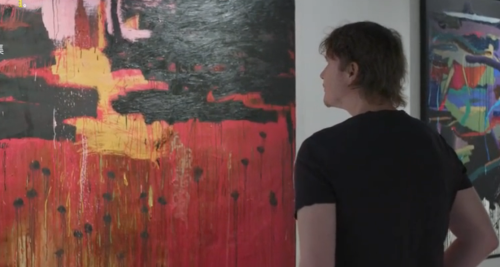
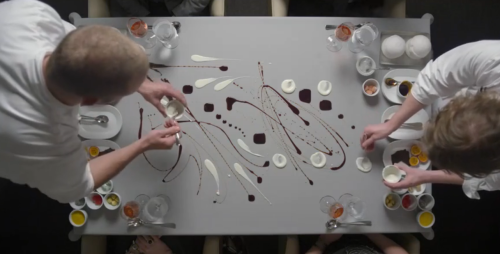
He put the food directly on the tablecloth, like creating a action painting.
They created a balloon made of sugar.
His dishs are full of ingenious settings. He creats an new experience. Through a variety of innovative tricks, these dishs excite customer’s brain.
‘It’s a fun dynamic to be able to surprise people with food.’
‘They turn a meal into a truly emotional experience.’
He is an artist.
He thinks it is his duty to keep innovating.
Subscribe to:
Posts (Atom)